
5 Places an Absorbent Mat Improves Home Cleanliness
Water pooling on your bathroom floor after a shower takes less than 24 hours to become a breeding ground for bacteria and mildew. Most homes have at least five spots where moisture sits unnoticed, slowly damaging surfaces and creating hygiene issues that regular cleaning can't fully solve. An absorbent mat works passively in these wet zones, pulling moisture away from floors and countertops before problems start, and materials like diatomite take this further by drying completely within minutes instead of staying damp like fabric options.
Table of Contents
How Absorbent Mats Actually Work
Most people think all absorbent mats work the same way, but the material makes a huge difference in how well they actually keep your home clean. Traditional fabric mats soak up water like a sponge and then just sit there holding all that moisture against your floor. That trapped water creates the perfect environment for bacteria, mildew, and those musty smells that never quite go away. The mat stays damp for hours, sometimes even days, depending on how much water it absorbed.
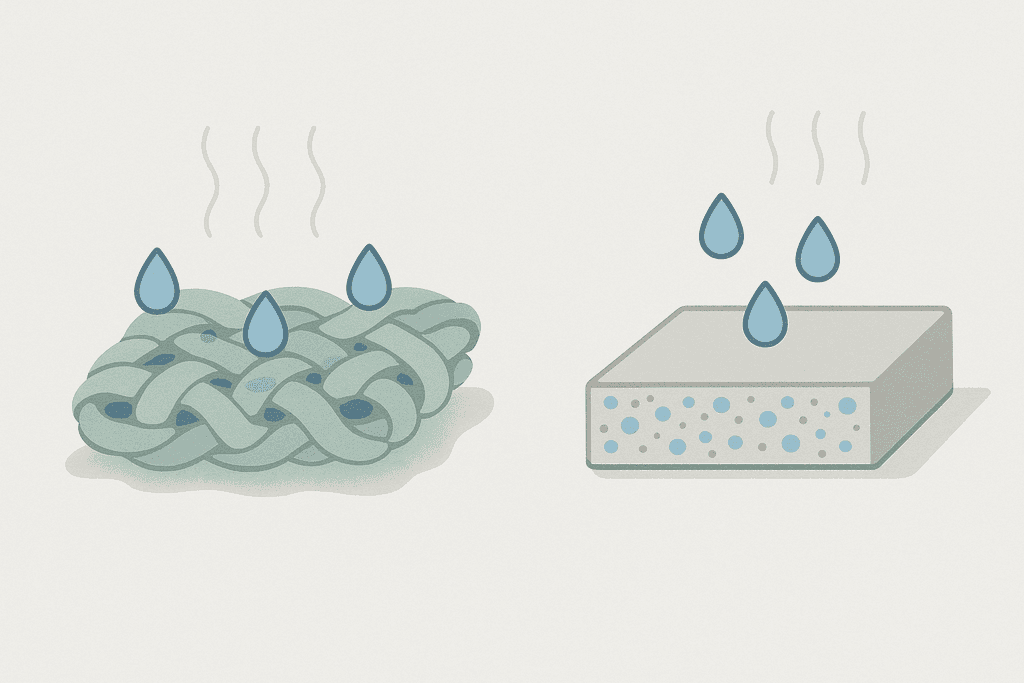
Diatomite works completely differently because of its unique internal structure. This fossilized algae material contains millions of microscopic pores that pull moisture in instantly, then release it back into the air through rapid evaporation. Instead of trapping water like fabric does, diatomite lets it escape naturally.
The science behind this matters for your home's cleanliness. When a mat dries within minutes instead of hours, bacteria doesn't get the chance to multiply. Odors don't develop. Your floors stay protected instead of sitting under a soggy mess.
Why Material Composition Matters
The base material of your mat determines everything about its performance. Here's what actually happens with different types:
- Fabric mats absorb water into fibers that hold moisture for extended periods
- Rubber mats repel water rather than absorb it, leaving puddles on the surface
- Diatomite mats pull water into porous channels that allow air circulation and evaporation
- Composite materials can combine absorption with structural durability
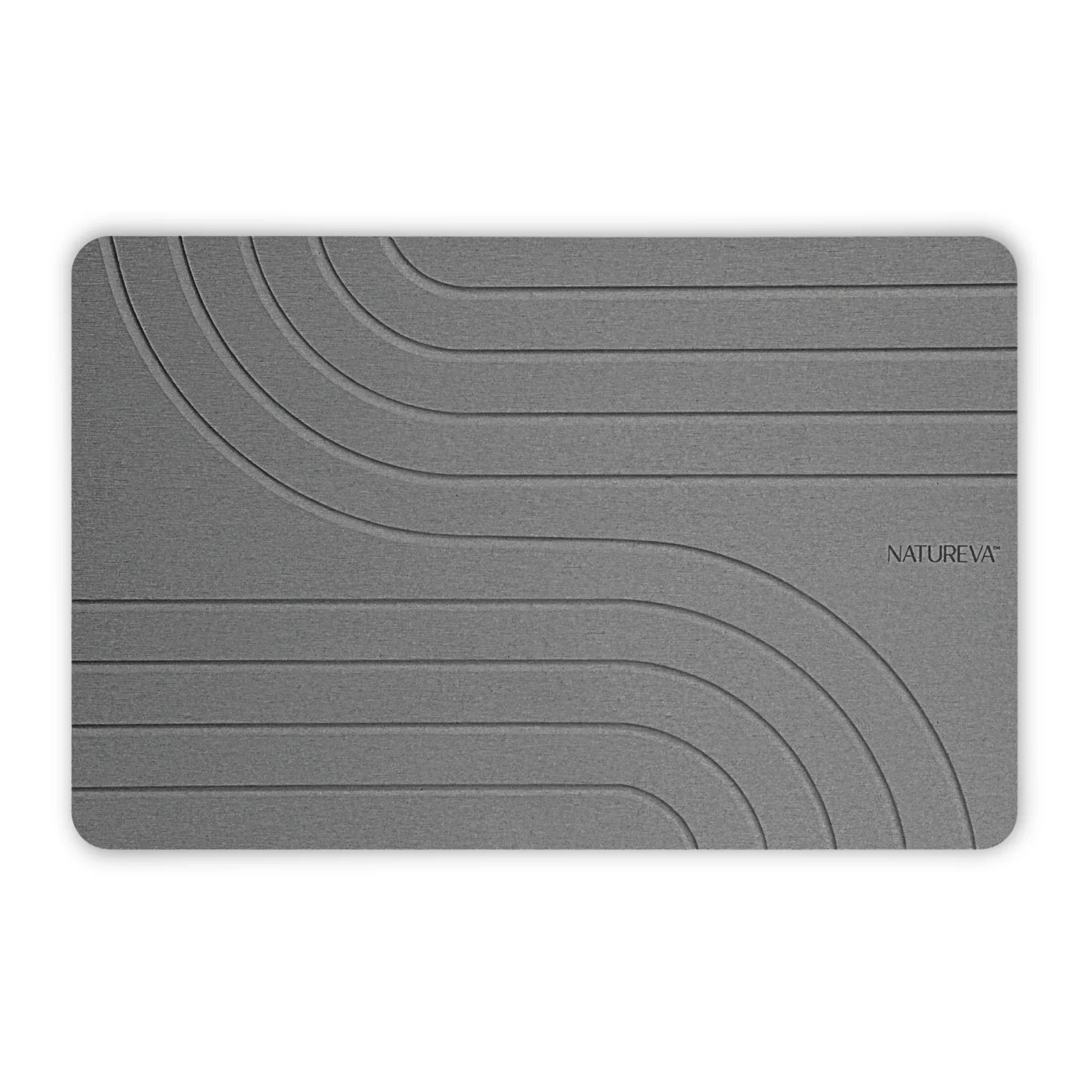
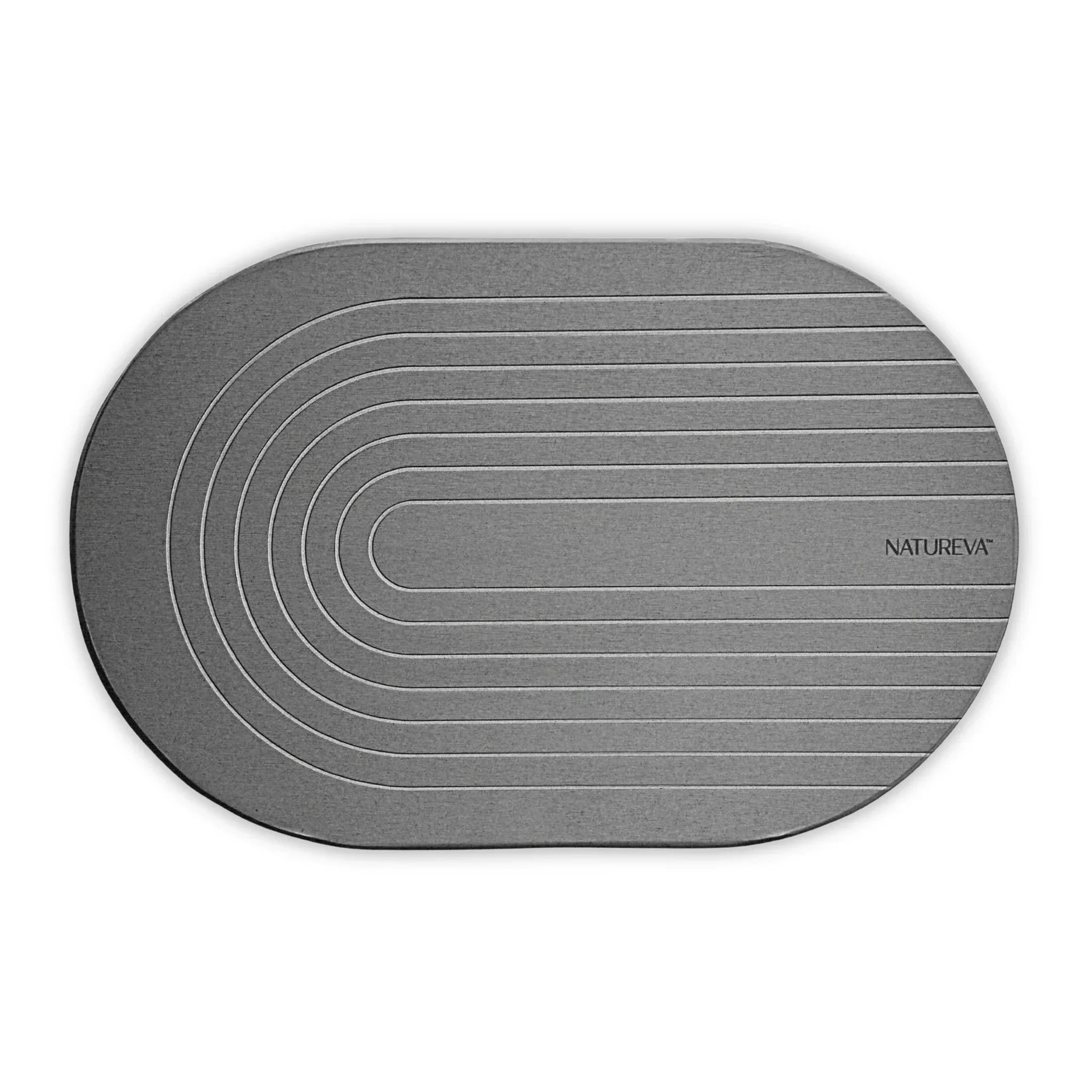
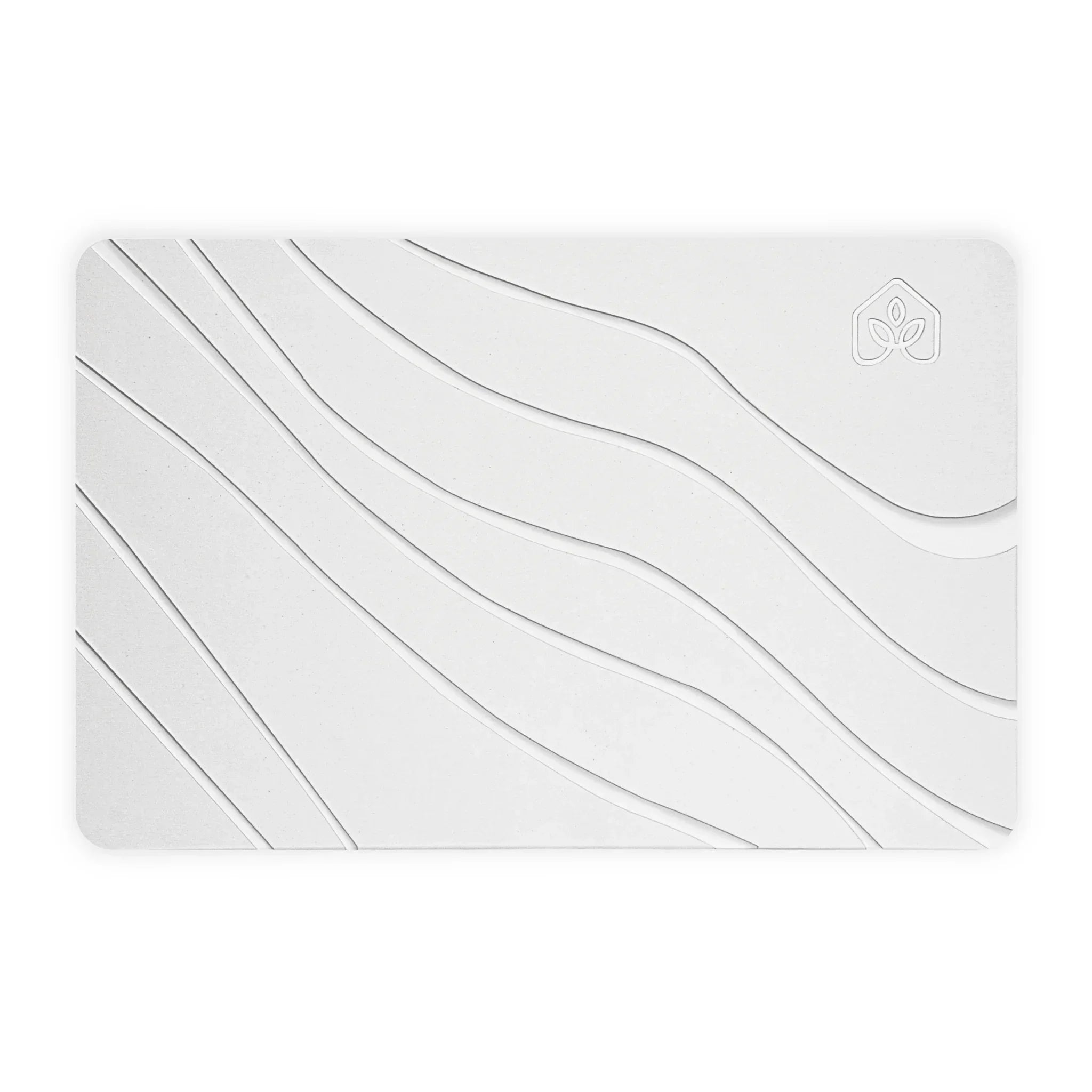
Natureva's stone mats use a composite of diatomaceous earth and recycled paper, compressed into a solid form that feels sturdy underfoot while maintaining those essential microscopic pores. No synthetic coatings get in the way of the natural drying process.
The Airflow Factor
Even the best absorbent material can fail if air can't circulate underneath. Mats that sit flat against surfaces trap moisture between the mat and your floor, leading to water damage, discoloration, and mold growth you might not even see until it's too late.
- Elevation allows air to reach the bottom surface of the mat
- Non-slip pads create just enough space for moisture to escape
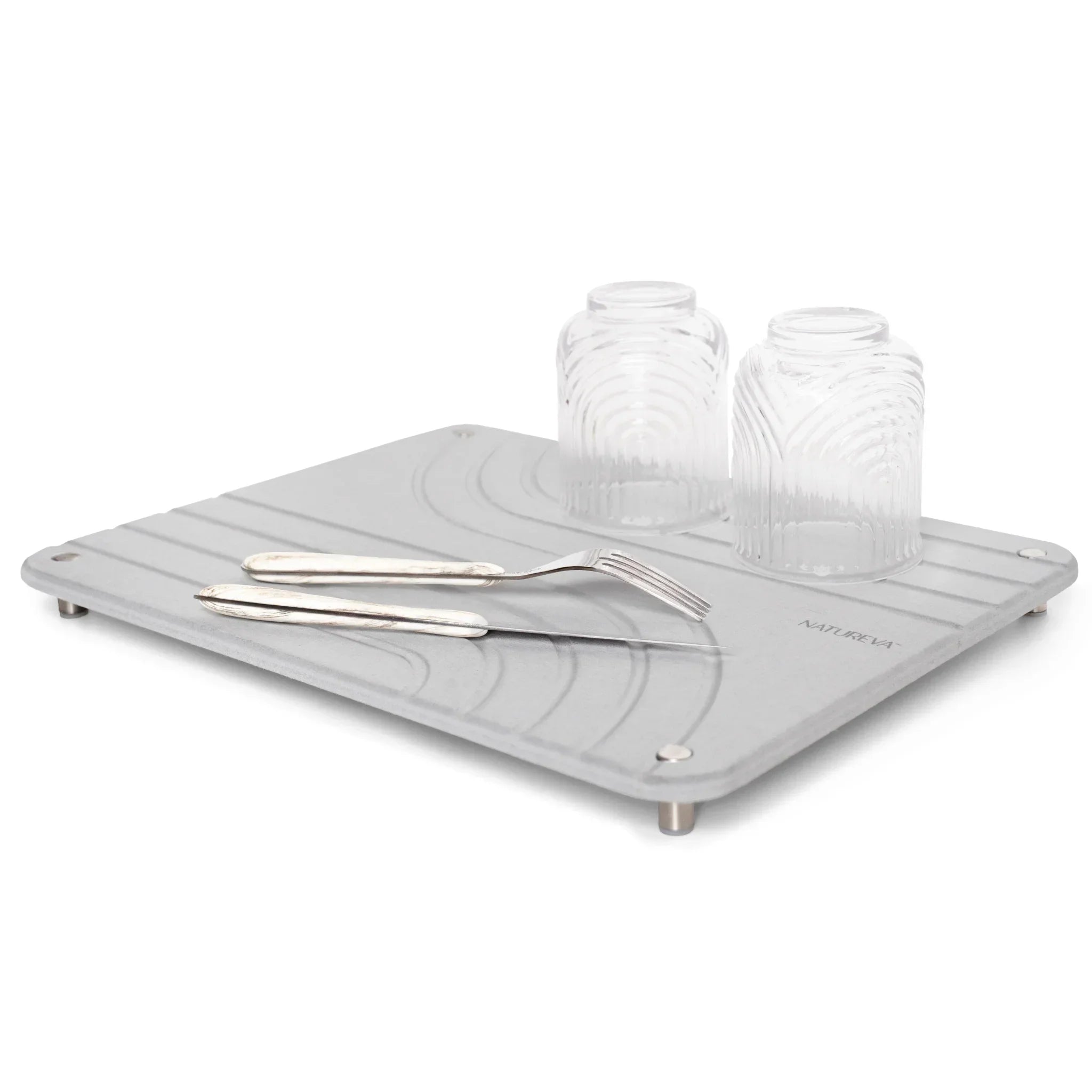
- Stainless steel legs on kitchen products provide 2.5 cm of clearance
- Proper airflow prevents saturation and extends the mat's functional life
This is why Natureva includes full non-slip base pads on bath mats and small elevation pads on coasters and plant saucers. The slight lift makes all the difference in drying performance.
Comparing Mat Materials
Different materials perform very differently when it comes to managing moisture in your home. Here's how the main options stack up:
| Feature | Diatomite Stone | Fabric/Cotton | Rubber/PVC |
|---|---|---|---|
| Absorption Speed | Instant (seconds) | Moderate (30-60 seconds) | None (water pools) |
| Drying Time | 5-10 minutes | 4-24 hours | Surface only |
| Bacteria Resistance | High (rapid drying) | Low (stays damp) | Medium (surface bacteria) |
| Odor Development | Minimal | High over time | Moderate |
| Maintenance Needs | Weekly wipe, occasional sand | Frequent washing required | Regular cleaning needed |
| Lifespan | Years with care | Months before replacement | 1-2 years |
The difference in drying time alone explains why some mats stay fresh while others develop that characteristic damp smell within weeks. When moisture evaporates in minutes instead of sitting for hours, you're not just keeping things drier—you're actively preventing the conditions that lead to bacteria growth and household mess.
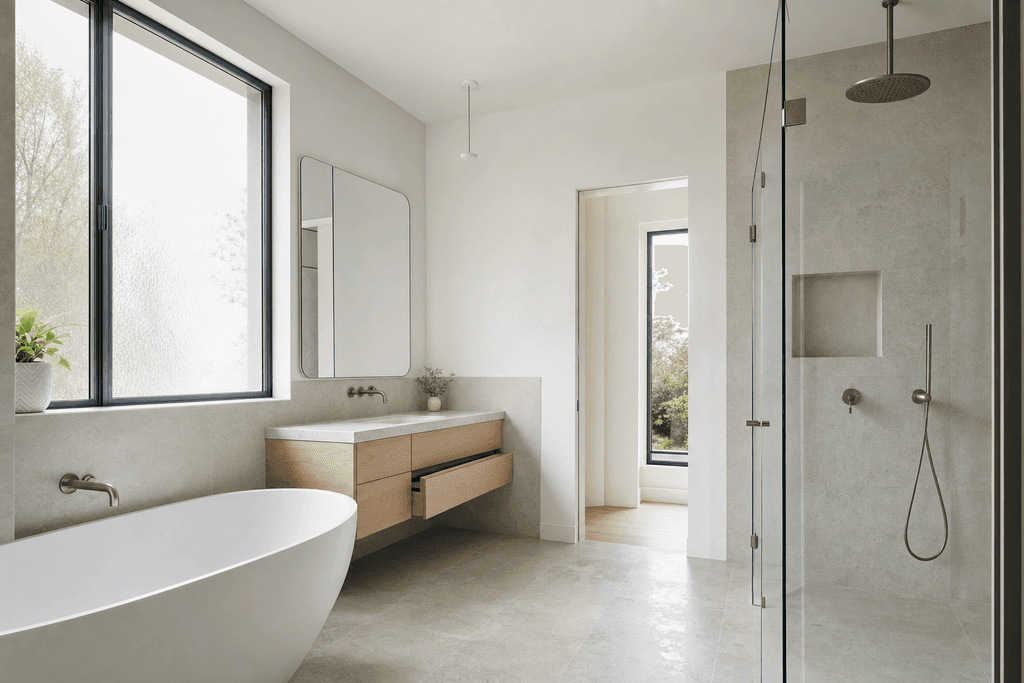
Bathroom Floors After Showers
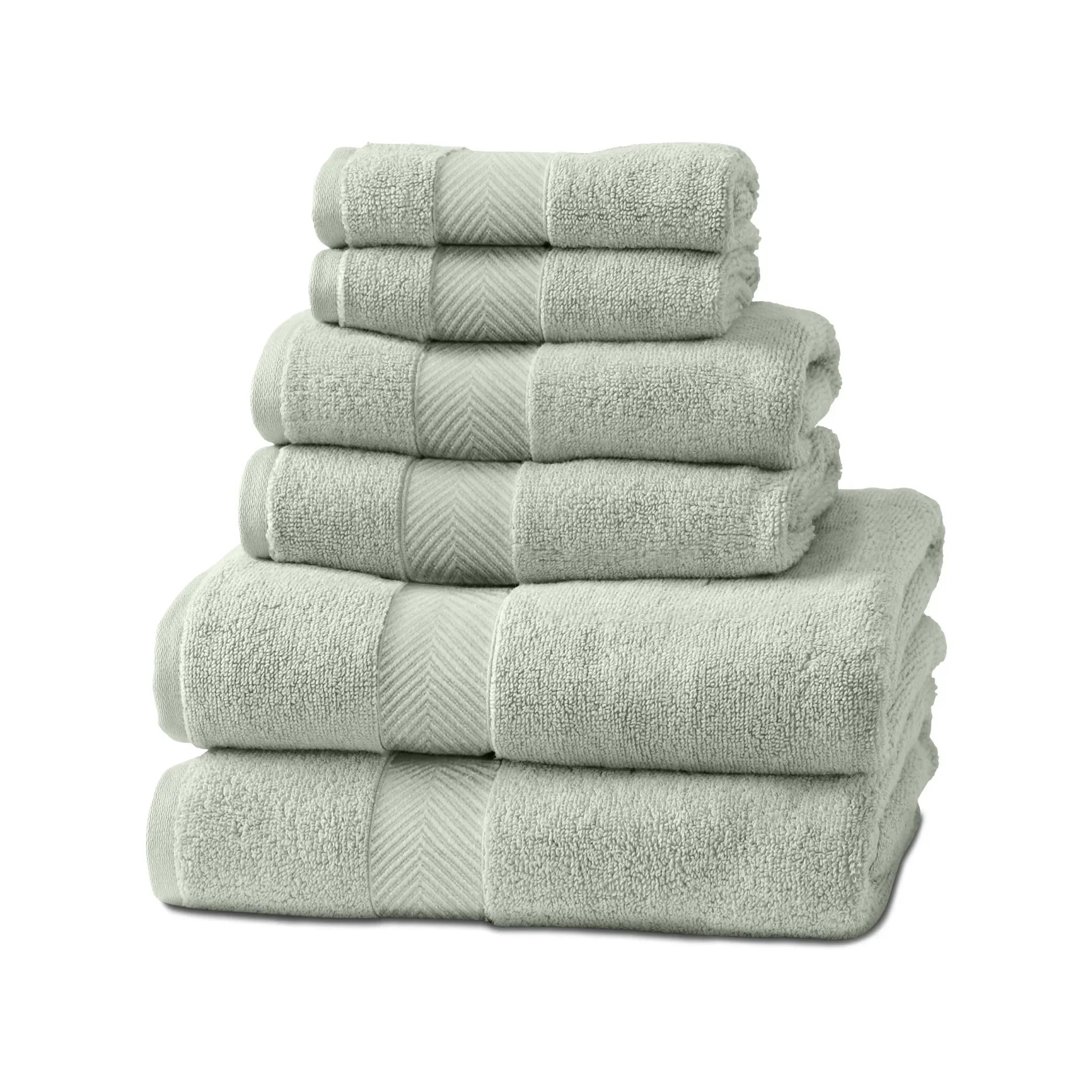
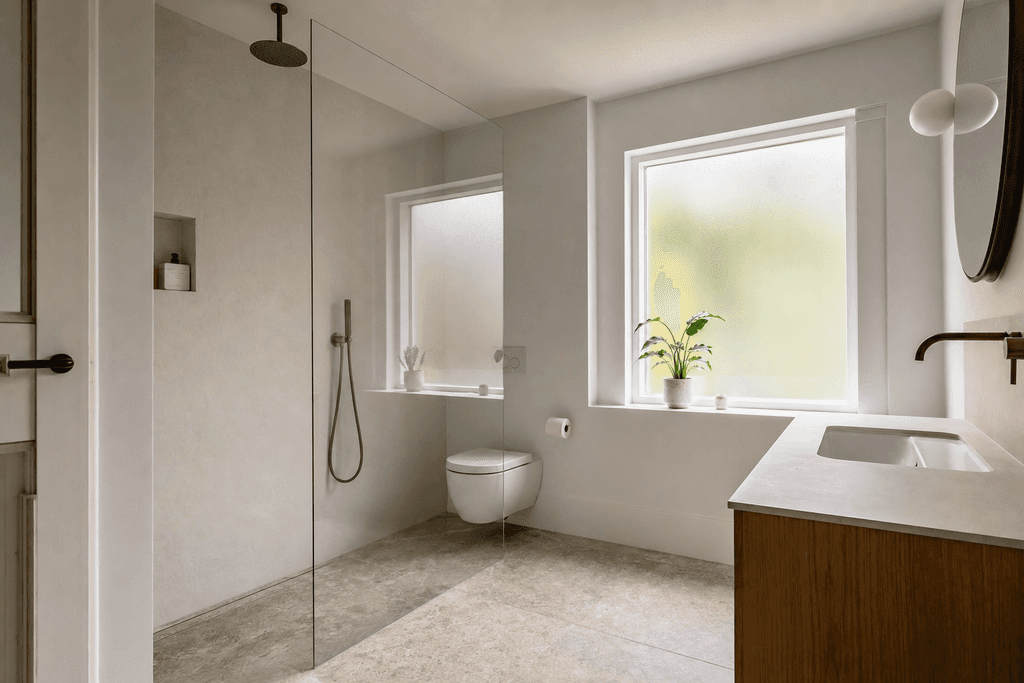
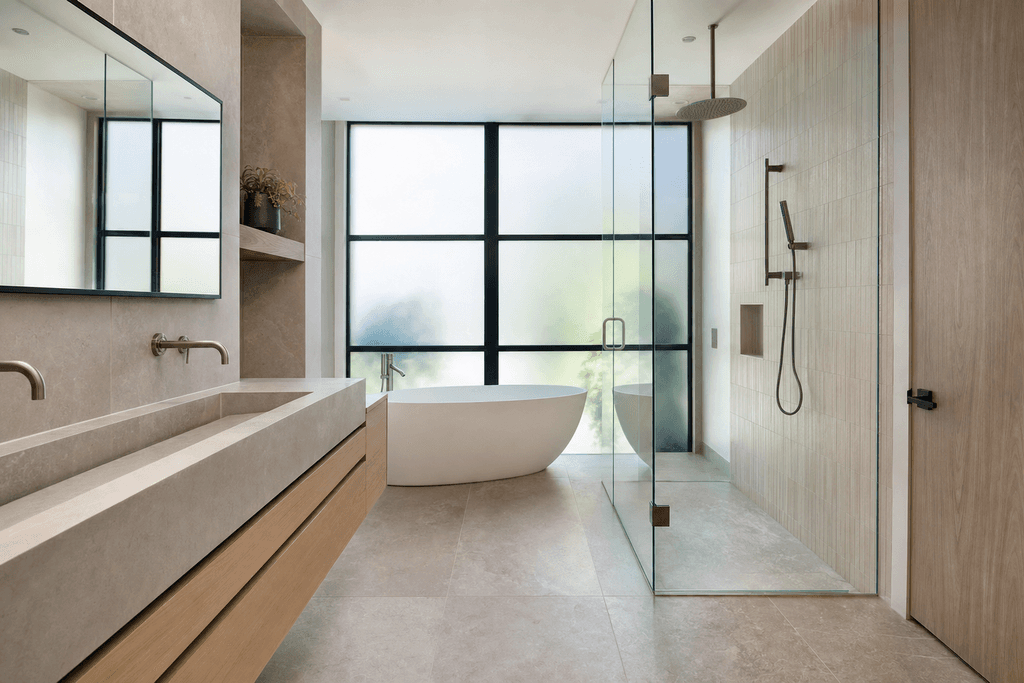
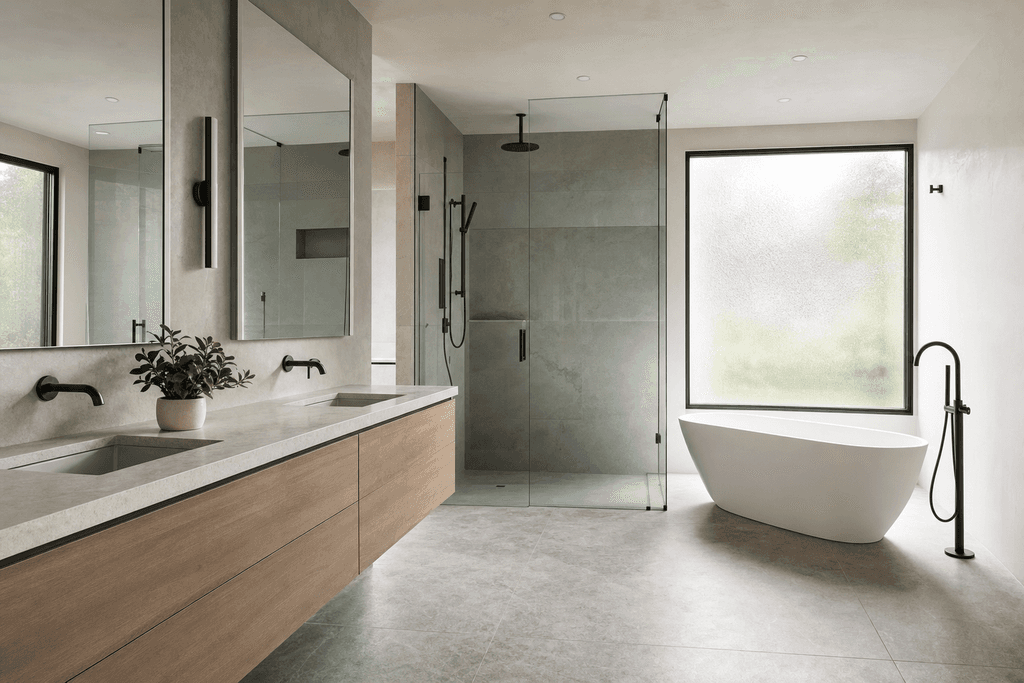
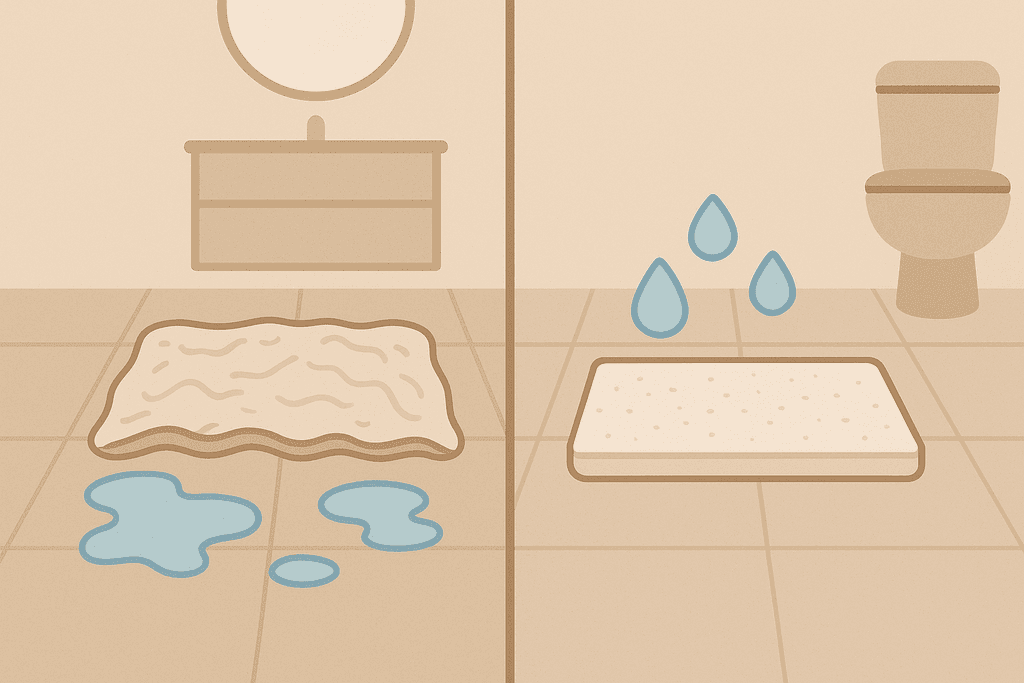
Most people don't realize that the average bathroom floor stays wet for 2-3 hours after a shower. That puddle of water isn't just annoying. It's slowly damaging your flooring, creating slip hazards, and giving bacteria the perfect place to grow. Traditional fabric bath mats soak up water but then sit there damp for hours, which means you're basically standing on a wet sponge every time you step out of the shower.
Bathroom Floors After Showers
The problem gets worse when you think about how often you're cleaning that mat. Most fabric mats need washing every few days to avoid that musty smell, and even then, they're trapping moisture against your floor.
Here's what happens with a stone bath mat instead:- Water absorbs instantly when your feet touch the surface
- The mat dries completely within minutes through rapid evaporation
- No damp fabric means bacteria can't thrive
- Non-slip bases keep the mat secure on tile and vinyl floors
- Your bathroom floor stays dry and safe all day
Our stone bath mats use diatomite, which is basically fossilized algae with millions of tiny pores. Those pores pull moisture away from your feet and release it into the air almost immediately. The mat feels dry to the touch within minutes, not hours.
Kitchen Sink Areas
Your kitchen sink area is probably the wettest spot in your home that isn't a bathroom. Every time you wash dishes, rinse vegetables, or just wash your hands, water splashes onto the counter. If you have a wooden countertop, that standing water is slowly creating damage you can't see yet. Even on laminate or stone counters, those water rings and soap residue build up fast, which means more scrubbing for you.
Kitchen Sink Areas
Traditional dish mats made from fabric or rubber create their own problems. They trap water underneath, which can stain counters or even cause mold growth. Plus, they need constant washing and never really feel clean.
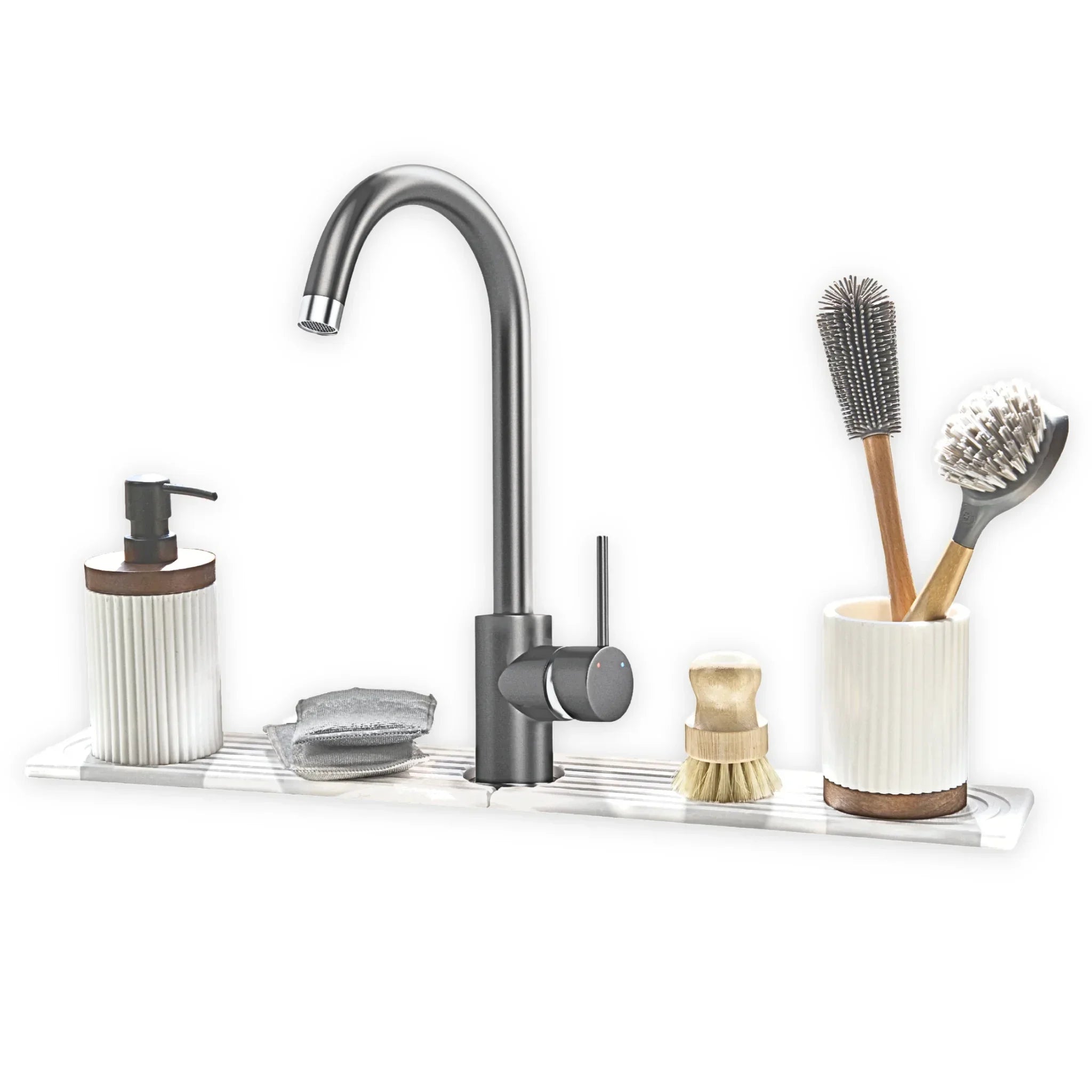
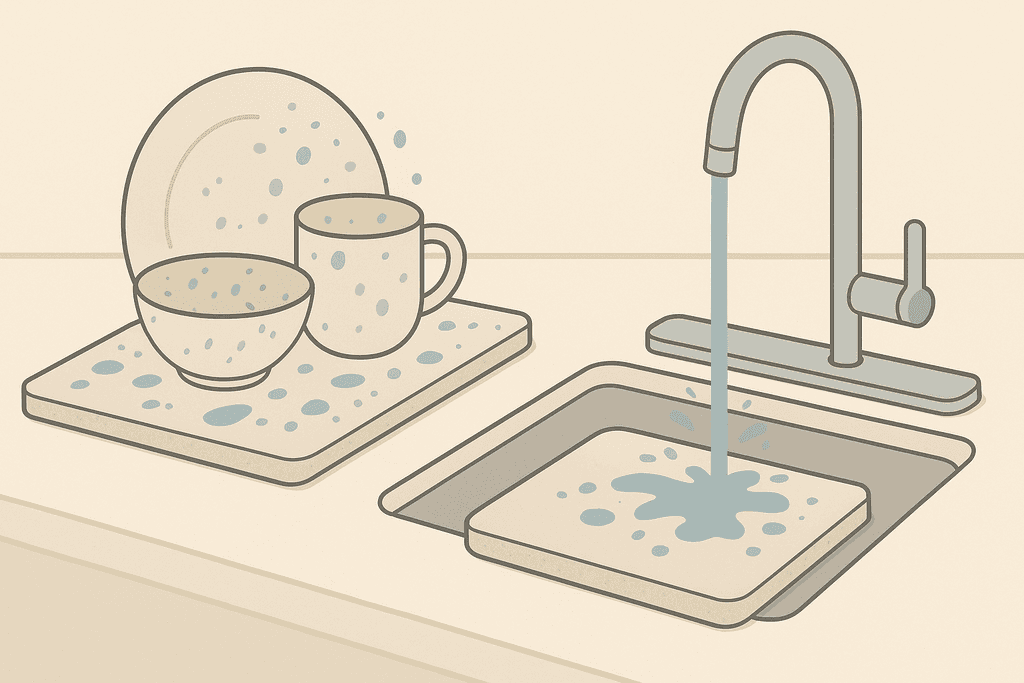
An absorbent mat system changes how your sink area works:- Dish mats elevated on legs allow airflow while absorbing drips from plates and cups
- Faucet mats catch splashes before water spreads across your counter
- Sink caddies keep soap bottles and sponges elevated while managing moisture
- Everything dries quickly instead of sitting in puddles
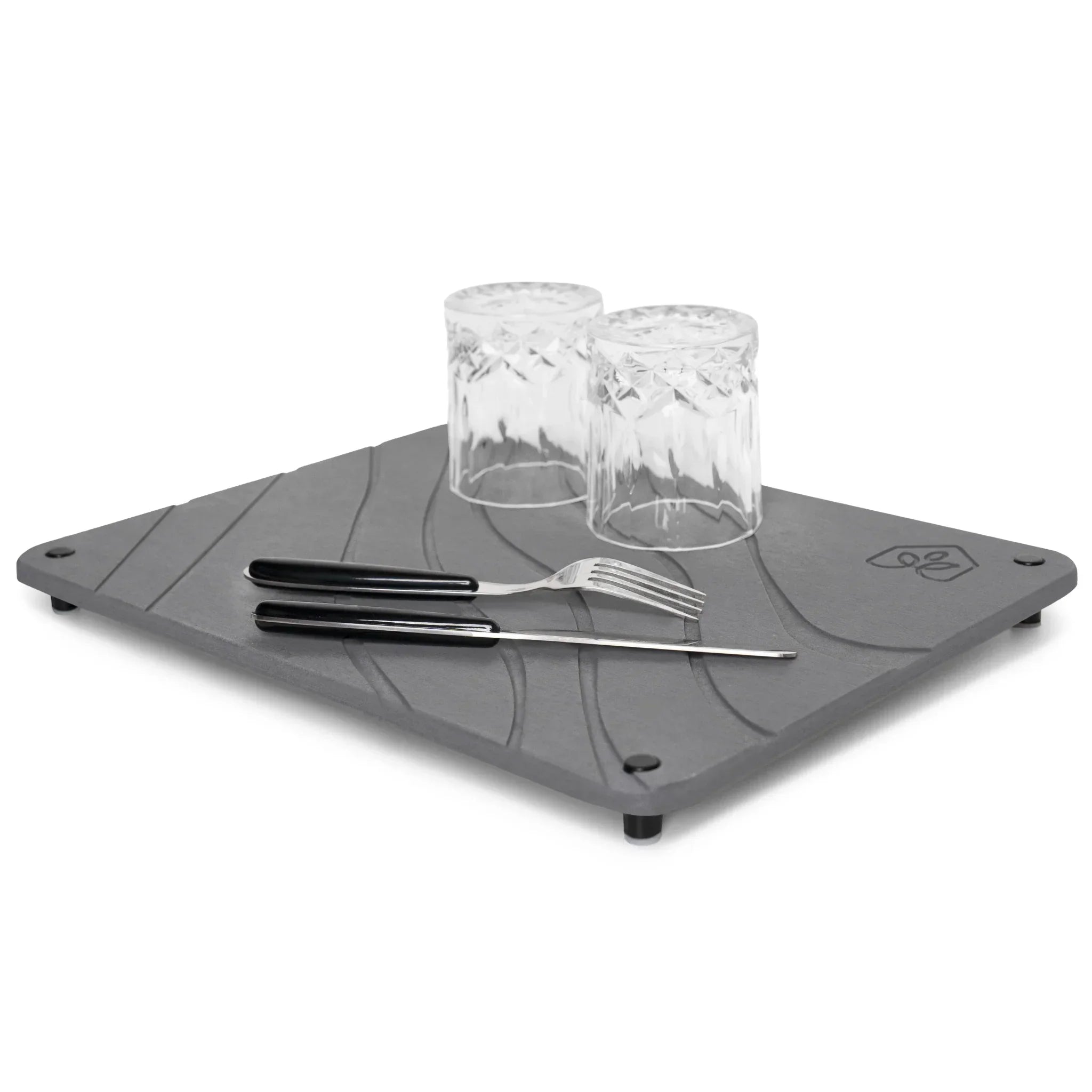
The stone dish mat sits 2.5 cm above your counter on stainless steel legs. Water drips through, gets absorbed by the stone, and evaporates into the air. The space underneath stays dry because air flows freely. Same concept applies to the faucet mat, which catches those annoying splashes that always seem to spread everywhere.
You end up wiping down your counters less often because water isn't pooling and spreading. The stone surface itself just needs a quick rinse under water if it gets dirty.
Entryways and Mudrooms
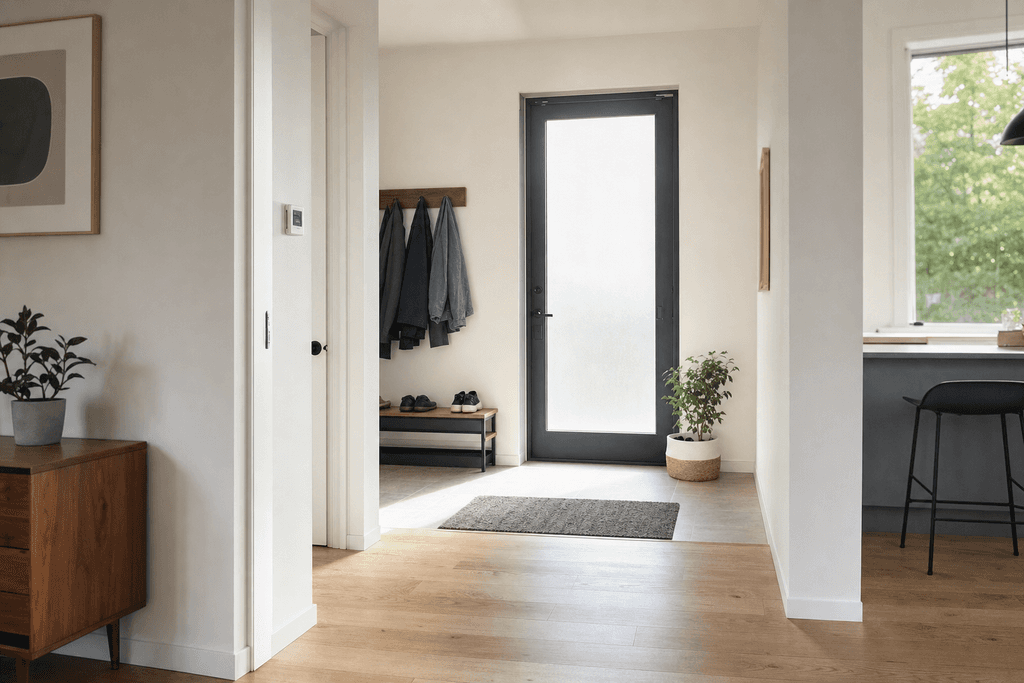
Wet shoes are basically moisture delivery systems for your entire home. One rainy day means puddles in your entryway, wet footprints down the hallway, and dirt tracked into every room. Most entry mats try to solve this but end up staying soggy for hours, which just moves the problem around instead of fixing it. The moisture sits there, the mat starts to smell, and you're still dealing with wet floors.
A quick-drying absorbent mat acts as a barrier:The next generation of home essentials: naturally made, cleaner by design, sustainable by nature.
SHOP ALL- Captures moisture from shoes before it spreads through your home
- Dries rapidly so the next person doesn't step onto a wet surface
- Handles heavy foot traffic without staying damp
- Reduces the amount of dirt and water that makes it past your entryway
Studies show that proper mat placement in entry zones can reduce floor cleaning throughout your home by up to 70%. That's because most of the dirt and moisture gets stopped at the door instead of being carried inside. A stone mat in high-traffic areas stays functional all day because it doesn't hold onto moisture like fabric does.
Under Pet Bowls and Feeding Stations
If you have pets, you know that water bowls are basically small flooding zones. Dogs splash when they drink, cats are surprisingly messy, and somehow water always ends up on the floor. That constant moisture exposure damages hardwood floors over time and creates sticky residue on tile that attracts dirt. You're probably wiping down the area around pet bowls at least once a day, maybe more.
Regular pet mats made from silicone or fabric don't really solve the problem. They catch the water, sure, but then it just sits there in a puddle on top of the mat.
An absorbent pet mat works differently:- Absorbs spills and splashes immediately instead of letting them pool
- Keeps the feeding area dry throughout the day
- Protects floors from water damage and staining
- Easy to clean with just a quick wipe or rinse
The stone pet mat has two circular feeding zones carved into the surface, so you can place both food and water bowls on one mat. When your pet makes a mess, the stone absorbs it right away. The moisture evaporates naturally, so you're not constantly standing in puddles when you refill bowls.
Around Indoor Plants
Indoor plants need water, but that water has to go somewhere. When you water your plants, excess moisture drains out the bottom and sits in whatever saucer you're using. Traditional plastic saucers just hold that water in a pool, which can lead to root rot for your plants and water rings on your furniture. Those rings are permanent damage on wood surfaces, and even on other materials, they leave marks that are hard to remove.
The problem is worse on windowsills and shelves where you might not notice the water pooling until it's too late.
Absorbent plant saucers manage moisture naturally:- Wick away excess water from drainage holes
- Prevent water from pooling and causing root rot
- Protect furniture and windowsills from water damage
- Elevated design allows airflow underneath to prevent surface marks
Our stone plant saucers come in two sizes and absorb overflow water while letting air circulate underneath. The stone pulls moisture away from your plant's roots and releases it into the air gradually. Your furniture stays protected, your plants stay healthier, and you don't have to worry about checking for water rings every time you water.
The saucers sit slightly elevated on rubber pads, which means air flows underneath and prevents any moisture from being trapped against your surfaces. It's a simple setup that handles the moisture problem without creating new ones.
Small Changes, Cleaner Spaces
An absorbent mat in the right spot does more work than you'd think. The bathroom floor stays dry after showers, the kitchen counter doesn't pool water around the dish rack, and your entryway stops tracking mud through the house. These aren't big changes, but they add up to less time wiping surfaces and fewer chances for mold or mildew to take hold. When moisture gets absorbed right where it happens, you're not chasing drips around the house later.
The five zones we covered, bathroom, kitchen, entryway, pet feeding area, and plant stations, all share the same problem. Water sits where it shouldn't. Traditional fabric mats trap that moisture instead of releasing it, which means they need constant washing and still end up smelling off. Stone options like our diatomite bath mats work differently because they dry in minutes instead of hours.
Switching to natural materials doesn't mean sacrificing function. Diatomite absorbs faster than cotton or microfiber, and it doesn't need the same maintenance cycle. You're not throwing mats in the wash every few days or replacing them when they start to break down. The same goes for areas like the kitchen, where a stone dish mat handles wet dishes without staying damp for hours.
Most people don't realize how much passive cleaning happens when moisture doesn't stick around. Fewer water rings on counters, less slipping on bathroom tile, and no musty smell from damp fabric. That's what strategic placement does, it handles the mess before it becomes something you need to actively clean.
If you're wondering which spots in your home would benefit most, or how to maintain these materials long term, the questions below cover the practical details.
Common Questions About Absorbent Mats
Choosing the right absorbent mat means understanding how they actually work in your home. Most people have questions about drying times, maintenance, and whether these mats can handle real life moisture situations. Here are the answers to the most common questions we hear about absorbent mats and how they perform day to day.
How long do absorbent mats take to dry?
Stone absorbent mats made from diatomite dry in minutes, not hours. The porous structure pulls moisture from the surface and releases it into the air almost immediately. Fabric mats can take several hours to fully dry, which is why they often feel damp between uses.
Can absorbent mats handle heavy moisture?
Yes, but it depends on the material. Diatomite stone mats absorb water instantly and can handle multiple wet feet or dripping dishes without staying saturated. If a stone mat does get overloaded, just prop it upright to air dry for 30 minutes. Fabric mats tend to hold moisture longer and need more frequent washing when used in high traffic areas.
How do you clean and maintain absorbent mats?
Stone mats need a quick wipe with vinegar water once a week to stay fresh. If the surface starts absorbing slower over time, use the included sanding tool to reopen the pores and restore performance. Fabric mats require machine washing and drying, which takes more effort and energy compared to a simple wipe down.
What's the difference between stone and fabric mats?
Stone mats dry fast, stay rigid, and don't trap bacteria in wet fibers. Fabric mats are soft but hold moisture longer, need regular washing, and can develop odors if they don't dry completely. Stone options like Natureva's bath mats stay dry between uses because moisture evaporates instead of soaking in.
Where should you not use absorbent mats?
Avoid placing stone absorbent mats in areas where they'll sit in standing water for extended periods. They work best on flat, stable surfaces where airflow can reach underneath. Don't use them outdoors where rain or sprinklers will constantly saturate them beyond their evaporation capacity.
Do absorbent mats work in humid climates?
Stone absorbent mats still perform well in humid environments because they dry faster than the air around them. The porous structure releases moisture through evaporation even when humidity is high, though drying may take slightly longer than in dry climates. Fabric mats struggle more in humidity since they rely entirely on air drying.
The next generation of home essentials: naturally made, cleaner by design, sustainable by nature.
SHOP ALL