
Six Absorbent Mat Mistakes That Attract Damp
You step out of the shower onto your bath mat, and instead of a dry surface, you feel yesterday's dampness still lingering. Most absorbent mats stay wet for hours because they trap moisture instead of releasing it, turning your bathroom or kitchen into a breeding ground for mold and bacteria. The problem isn't just the mat itself—it's six common mistakes that keep your floors damp and your home less healthy than it should be.
Table of Contents
- How Absorbent Mats Actually Work
- Mistake 1: Choosing Mats That Can't Release Moisture
- Mistake 2: Placing Mats in Low-Airflow Areas
- Mistake 3: Ignoring Mat Thickness and Density
- Mistake 4: Not Cleaning Mats Properly
- Mistake 5: Using One Mat for Too Many People
- Mistake 6: Keeping Mats Flat on the Floor 24/7
- Making the Switch to Truly Dry Mats
- Common Questions About Absorbent Mats
How Absorbent Mats Actually Work
Most people think all absorbent mats work the same way, but that's not even close to true. The mat sitting outside your shower right now is probably doing half the job at best. Understanding how absorption and evaporation work together makes all the difference between a mat that keeps your floors dry and one that just moves the water problem to a different spot.
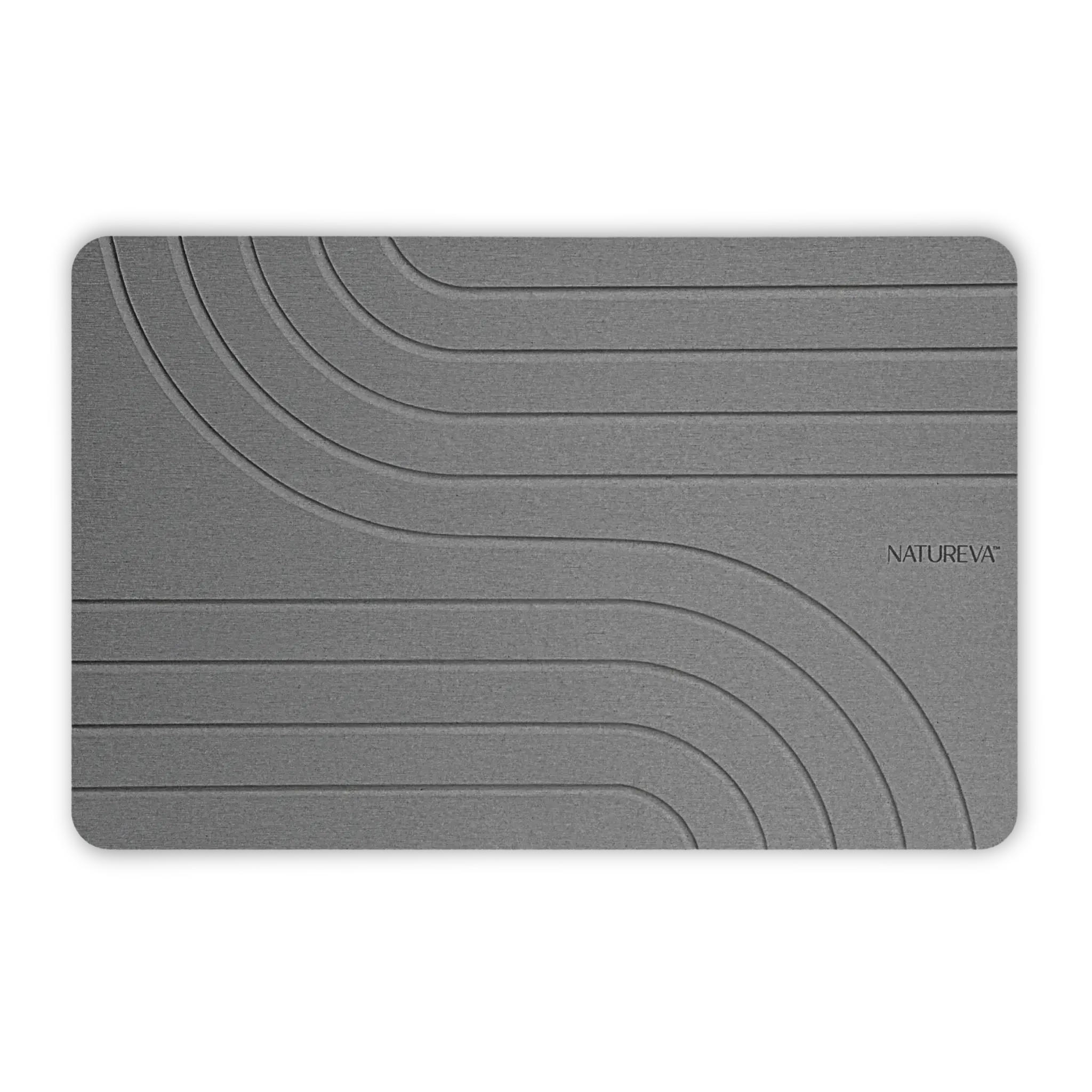
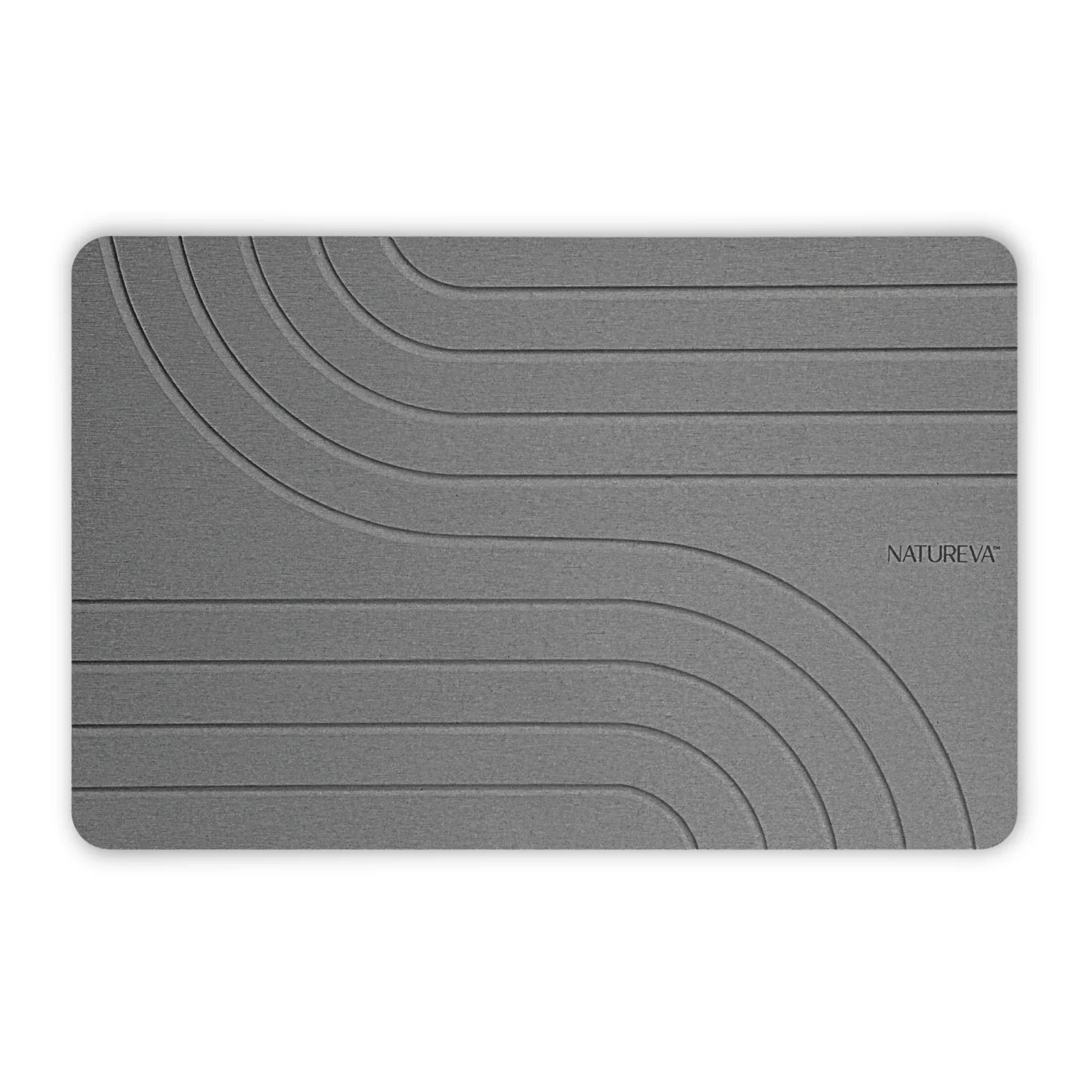
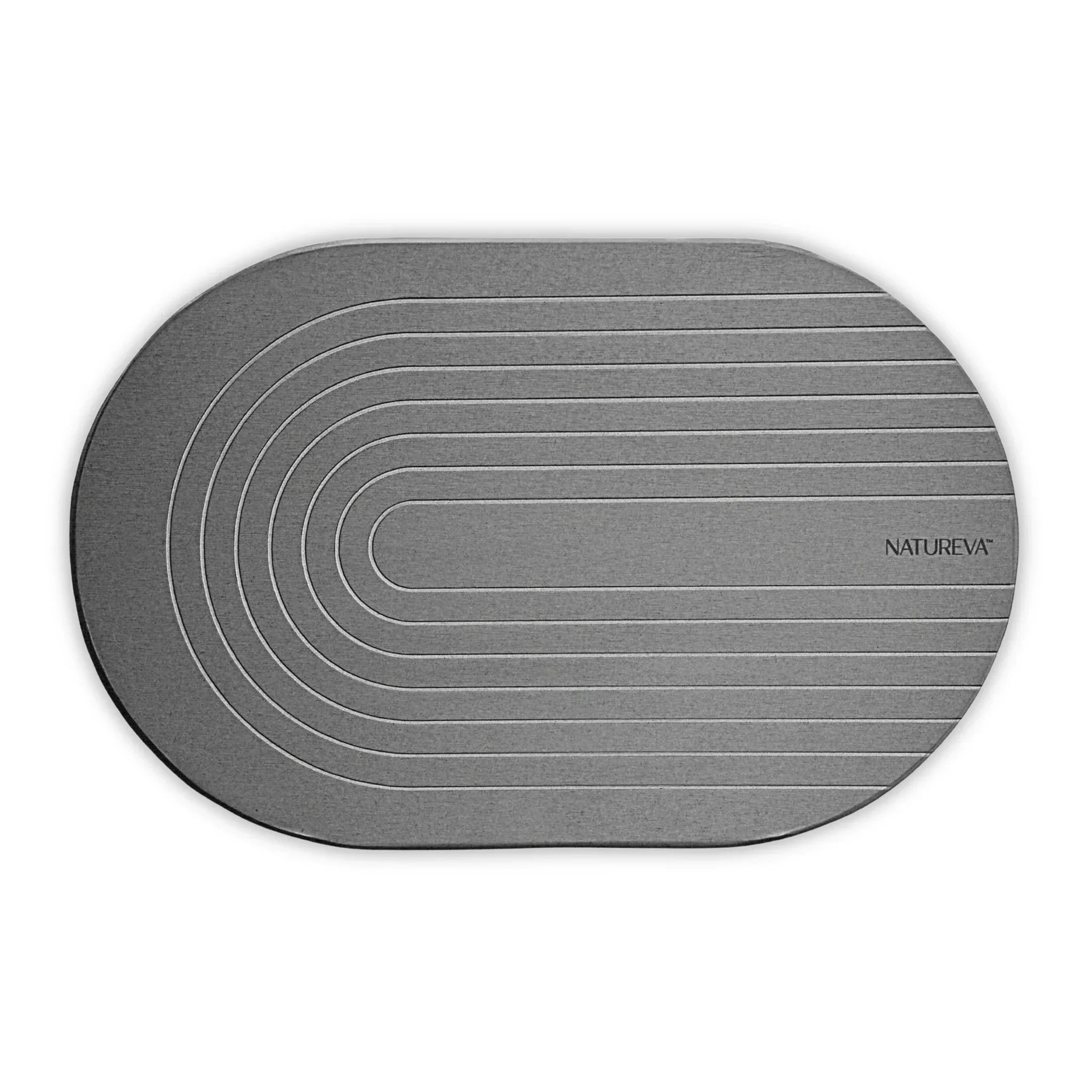
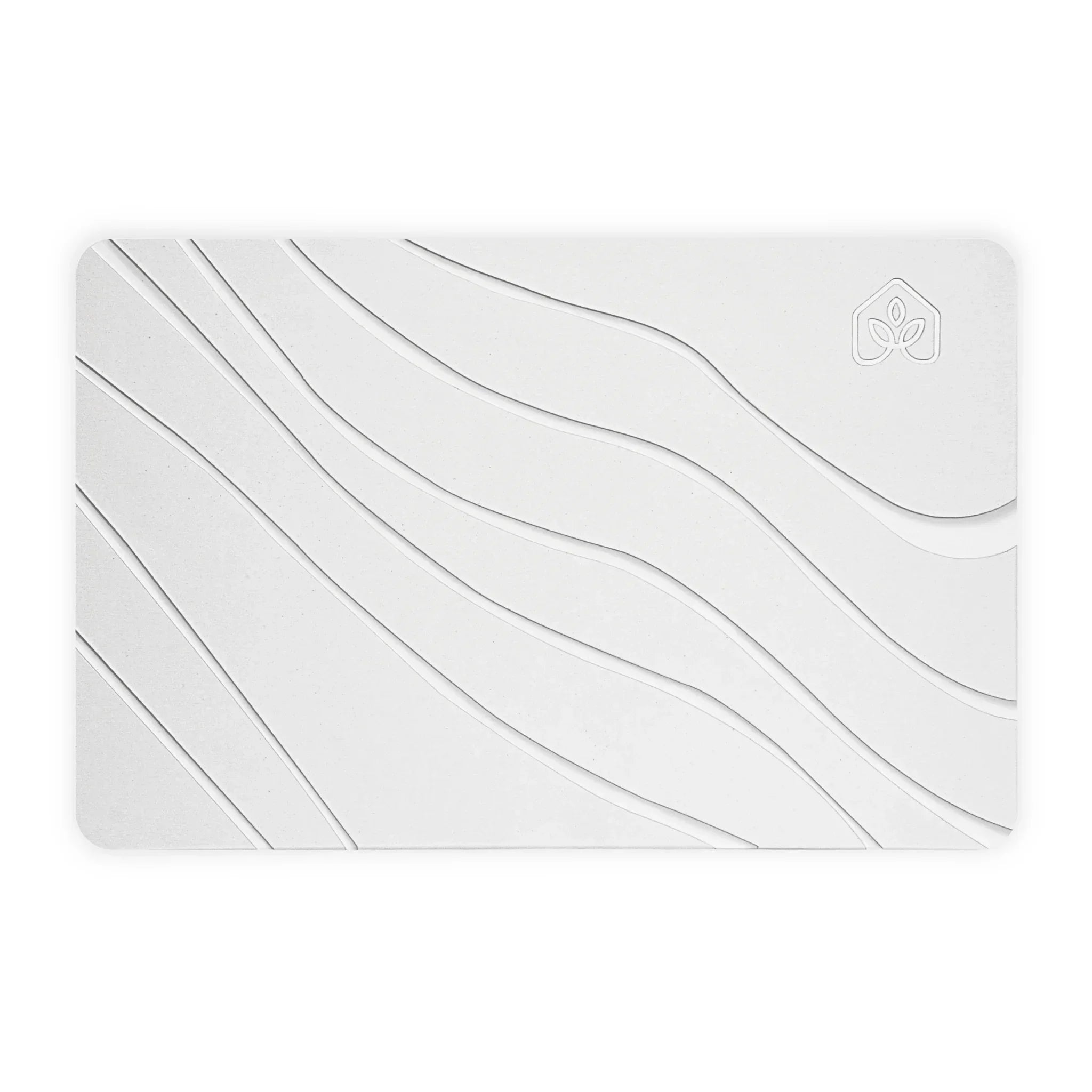
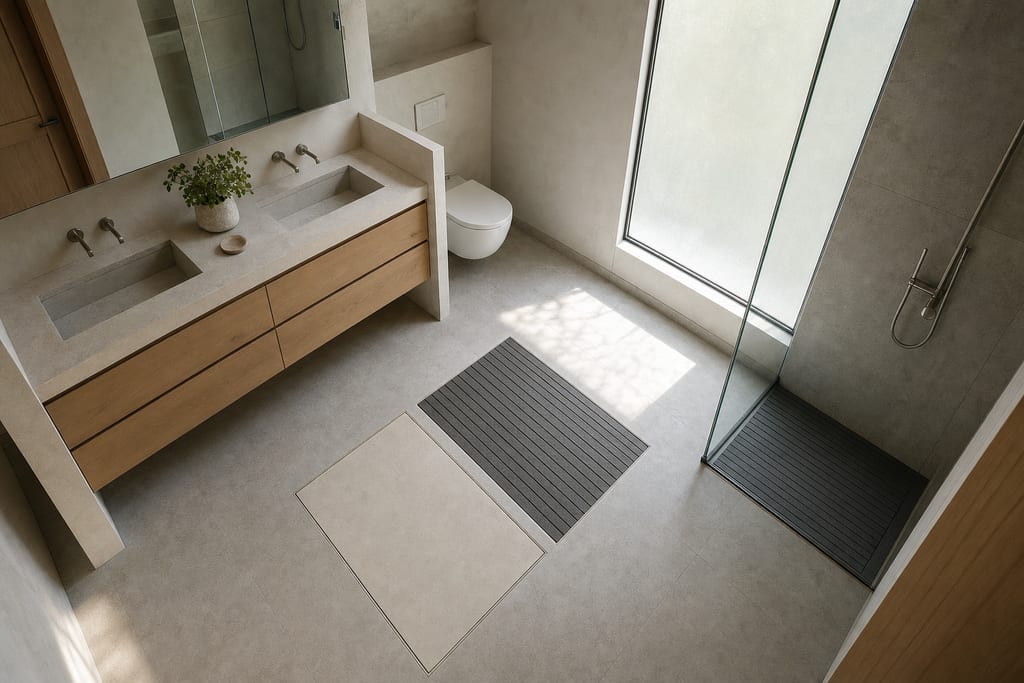
Stone Bath Mat - Tide
The Two Step Process Your Mat Needs
An absorbent mat has two jobs, not one. First, it needs to soak up water quickly when you step on it. Second, and this is where most mats fail, it needs to release that water back into the air through evaporation.
Think of it like a sponge in your kitchen. When you wipe up a spill, the sponge absorbs the liquid. But if you leave that wet sponge on the counter, it stays damp for hours because it can't dry itself out. Traditional fabric bath mats work exactly like that sponge, holding onto moisture way longer than they should.
Why Fabric Mats Stay Wet for Hours
Fabric mats are made from cotton, microfiber, or similar materials that trap water between their fibers. The problem is those fibers are packed tightly together, leaving almost no room for air to flow through and carry moisture away.
- Water gets stuck deep in the fabric layers
- Air can only reach the surface of the mat
- The bottom layer touching your floor stays wet the longest
- Bacteria and mold love these dark, damp conditions
Some brands like Dorah Home and Sleepsutera have tried to improve fabric mat designs, but they still face the same basic limitation. Fabric just holds water too well.
How Stone Mats Dry in Seconds
Diatomaceous earth stone mats work completely differently. This natural material is made up of millions of tiny fossils with microscopic pores running through them. When water hits the surface, it gets pulled into these pores instantly.
Here's where the magic happens. Those same pores that absorb water also let air flow through the entire mat, not just across the surface. Our Stone Bath Mat uses this natural process to dry in under 60 seconds after you step off it.
- Millions of tiny air channels run through the material
- Water spreads out across a huge internal surface area
- Air flows through and carries moisture away constantly
- The mat returns to completely dry in minutes, not hours
The Numbers Behind Drying Speed
The difference between fabric and stone becomes obvious when you measure actual drying times. Most people don't realize just how long their current mat stays damp.
| Mat Type | Initial Absorption | Surface Dry Time | Complete Dry Time | Moisture Retention |
|---|---|---|---|---|
| Cotton Fabric | 5-10 seconds | 2-4 hours | 6-12 hours | High |
| Microfiber Fabric | 3-8 seconds | 1-3 hours | 4-8 hours | Medium-High |
| Diatomaceous Stone | Instant | 30-60 seconds | 2-5 minutes | Very Low |
The speed difference comes down to one thing: porosity. Stone mats have about 80-90% more air space inside them compared to fabric mats, which means water can escape much faster. Products like our Stone Dish Mat use the same principle to keep kitchen counters dry without the soggy mess of traditional dish towels.
Mistake 1: Choosing Mats That Can't Release Moisture
Most people think all absorbent mats work the same way, but that's where the problem starts. The material your mat is made from determines whether it stays dry or becomes a soggy mess. Traditional fabric mats like cotton and microfiber are great at soaking up water, but they hold onto that moisture for hours afterward. This creates a breeding ground for bacteria and leaves your floors damp long after you've stepped out of the shower or finished washing dishes.
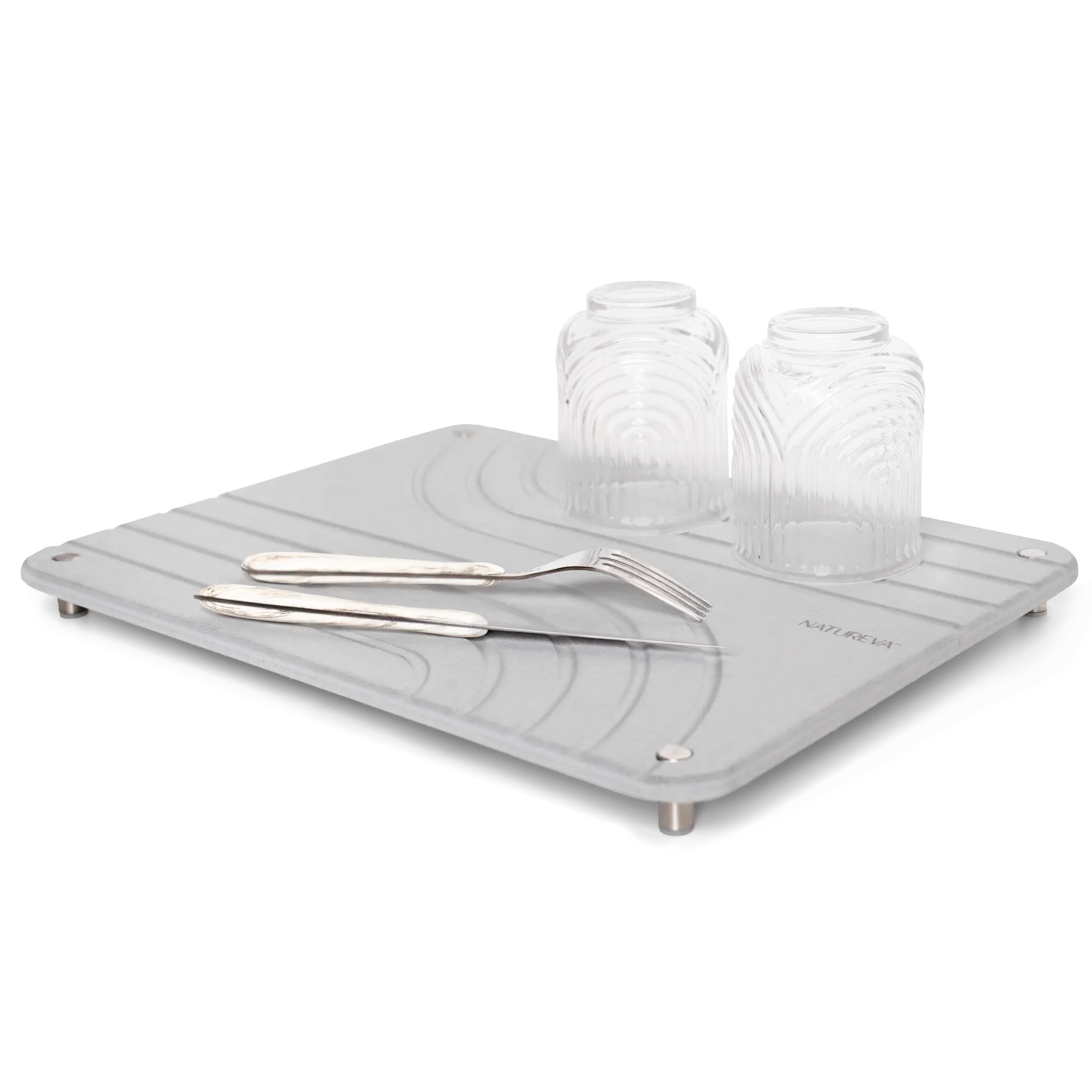
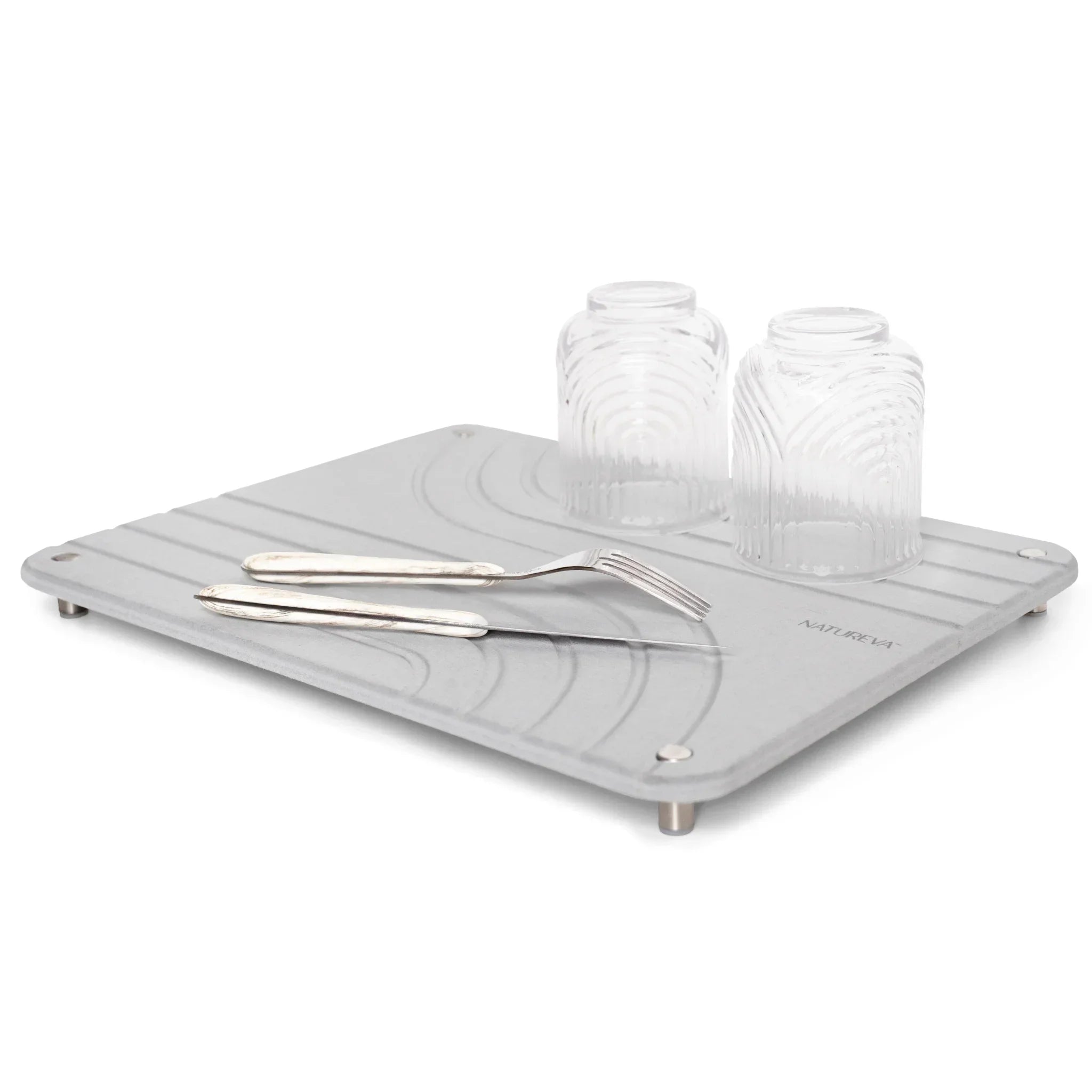
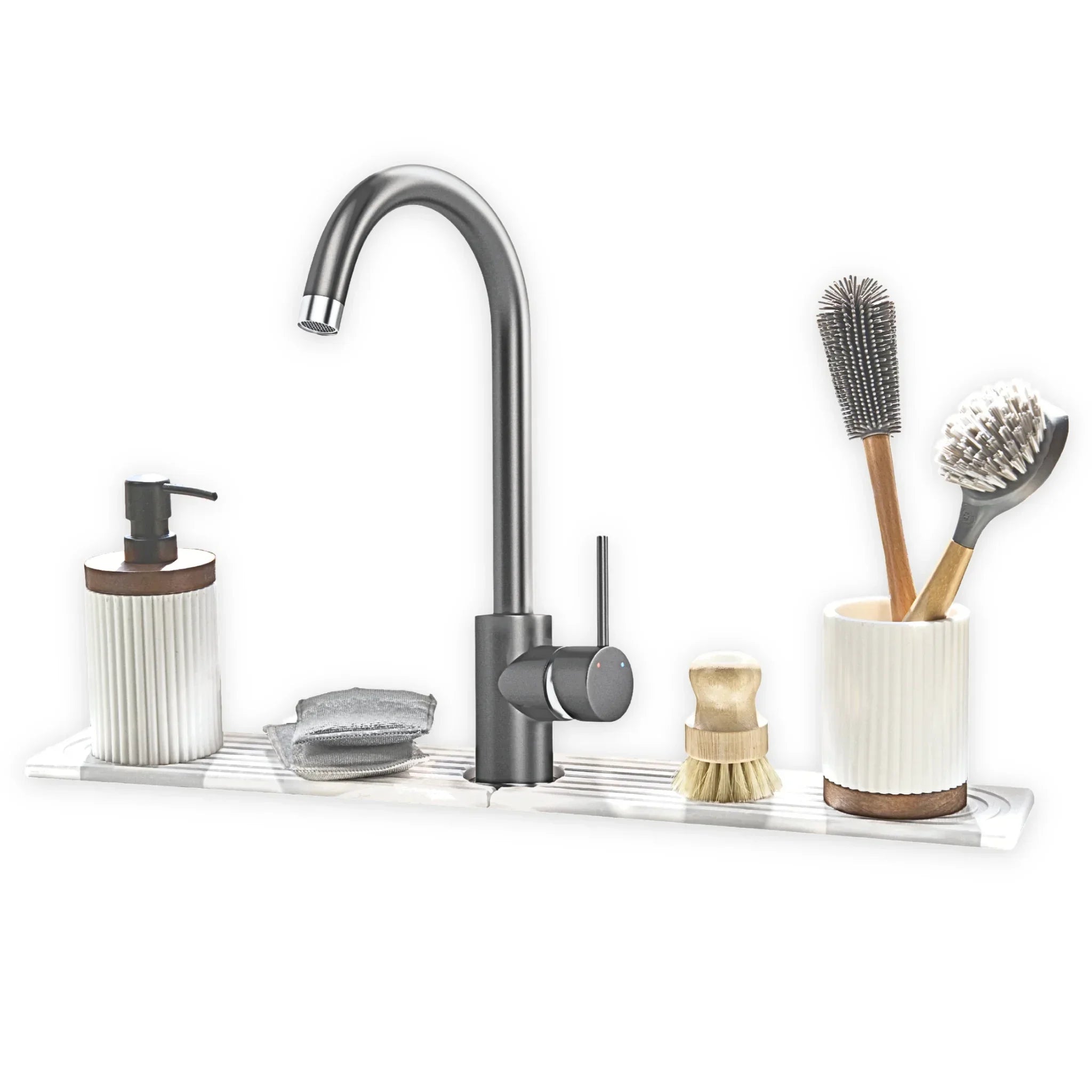
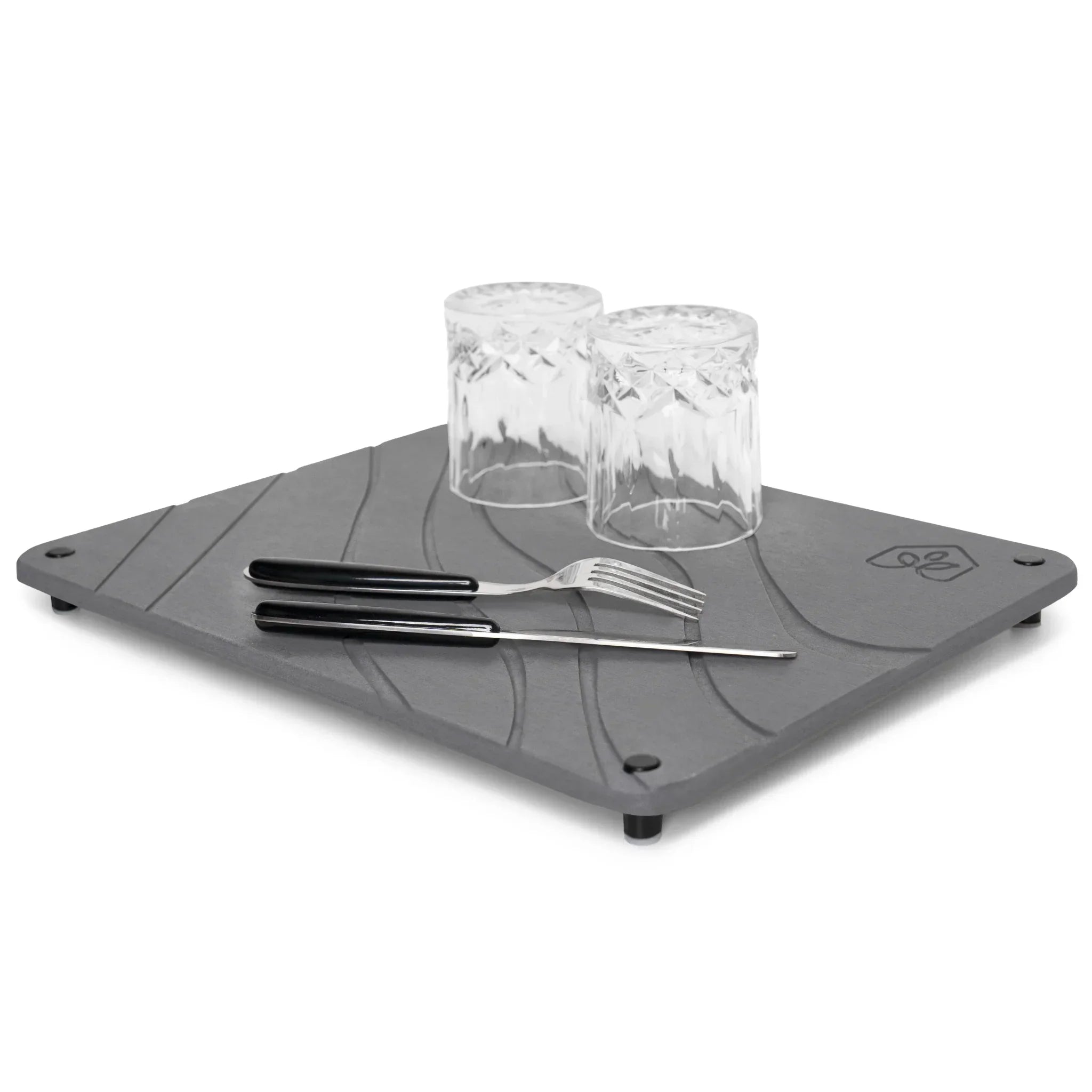
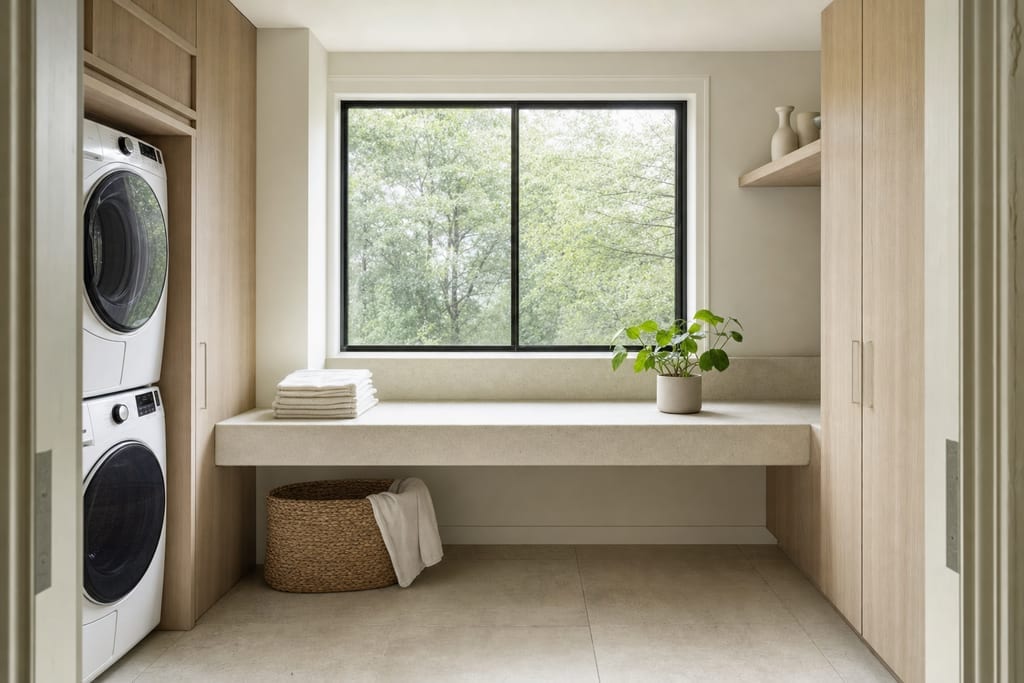
Stone Dish Mat - Tide
Cotton and microfiber mats typically stay wet for 4-6 hours after use. That's a long time for moisture to sit there, especially in a bathroom where humidity is already high. The fibers in these materials trap water deep inside, and without proper airflow, evaporation happens at a snail's pace.
Stone mats made from diatomaceous earth work completely differently. The porous structure of this natural material allows water to evaporate in under 60 seconds. Instead of trapping moisture like fabric does, the millions of tiny pores in stone mats pull water in and release it into the air almost immediately. This isn't just about convenience, it's about keeping your home healthier.
- Fabric mats absorb but can't release moisture quickly
- Stone mats dry in under 60 seconds through rapid evaporation
- Material choice matters more than thickness or size
- Diatomaceous earth has a naturally porous structure that promotes airflow
The Stone Bath Mat - Tide uses this natural diatomaceous earth technology to stay dry between uses. You won't find yourself stepping onto a cold, damp surface every time you get out of the shower.
Mistake 2: Placing Mats in Low-Airflow Areas
Where you put your mat matters just as much as what it's made from. A fabric mat tucked into a corner or pressed against a wall doesn't stand a chance of drying properly. Enclosed spaces prevent the air circulation that's needed for evaporation, which means your mat stays wet for even longer than usual. Bathrooms are already humid environments, and adding a damp mat that can't dry just makes things worse.
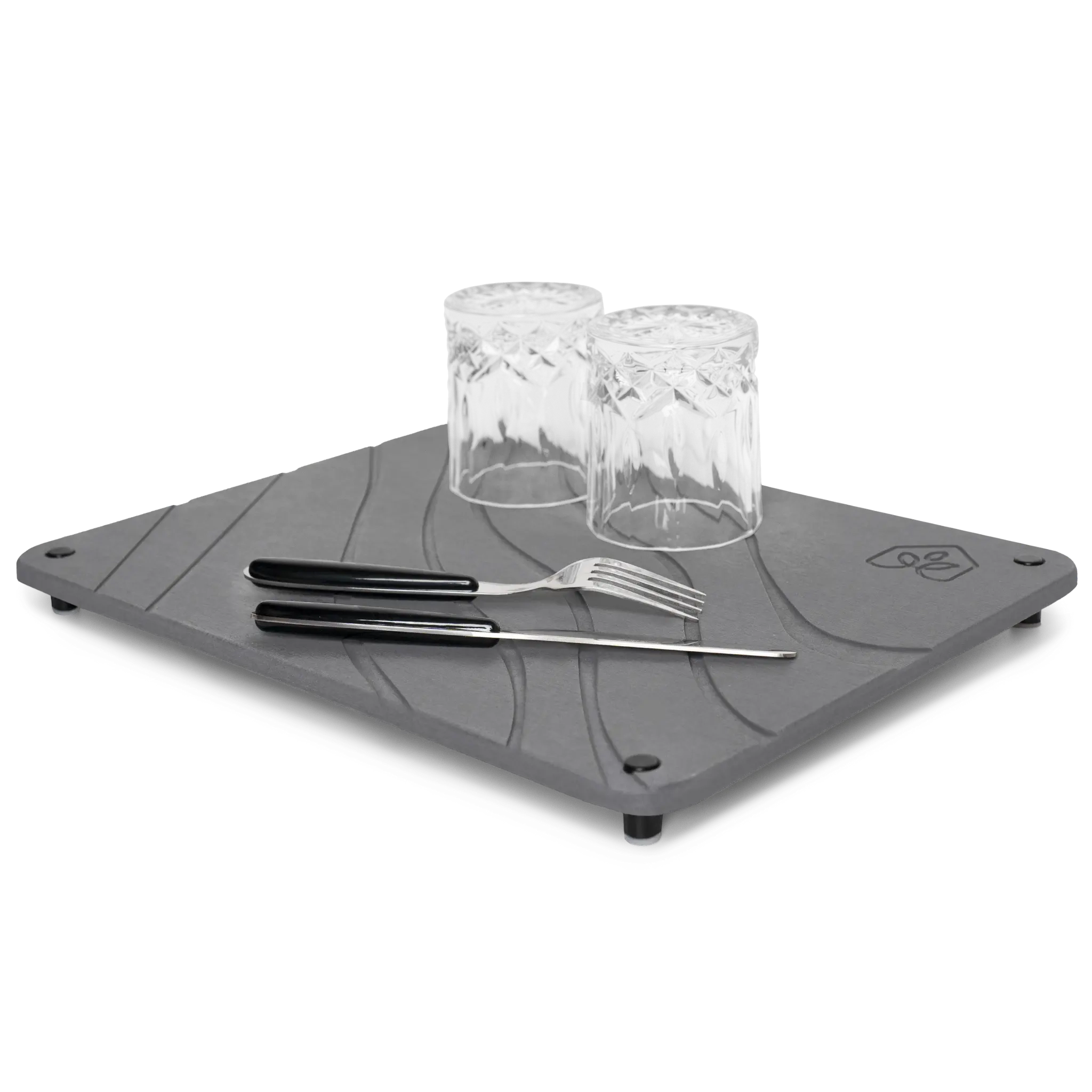
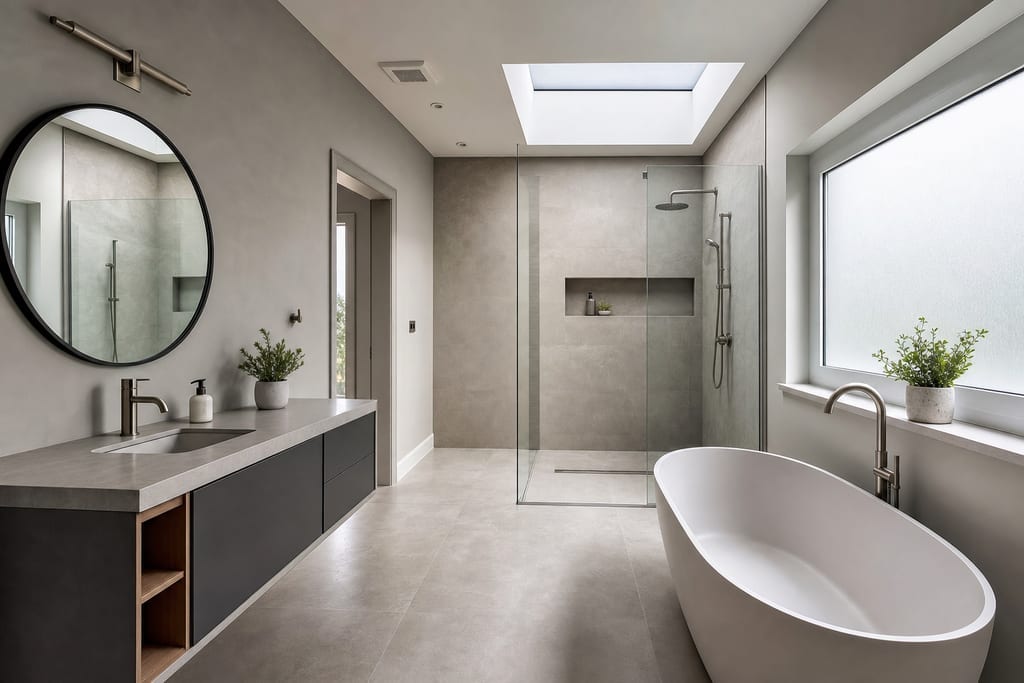
Stone Dish Mat - Flow
Mats placed in corners or against walls can take twice as long to dry compared to those in open areas. The problem is that most bathrooms and kitchens don't have ideal placement options. You need the mat right where water hits the floor, which is often in the worst spot for airflow.
Kitchen mats near sinks face constant moisture exposure throughout the day. Every time you wash dishes or rinse vegetables, water splashes onto the mat. If it can't dry between uses, it becomes a permanent wet spot on your floor. Stone mats solve this problem through their rapid evaporation properties, which work even in less-than-ideal locations.
Best and Worst Mat Locations
| Good Placement | Poor Placement |
|---|---|
| Open floor areas | Tight corners |
| Near windows | Against walls |
| Well-ventilated spaces | Enclosed shower stalls |
| Central bathroom areas | Under cabinets |
The Stone Dish Mat - Tide works well even in cramped kitchen spaces because it doesn't rely on airflow alone to dry.
Mistake 3: Ignoring Mat Thickness and Density
Thicker doesn't always mean better when it comes to absorbent mats. Many people buy extra-plush mats thinking they'll be more absorbent, but these thick fabric mats actually take much longer to dry completely. The water gets trapped in the middle layers where air can't reach it. What feels luxurious under your feet becomes a moisture trap that never fully dries out between uses.
Dense materials prevent air from reaching trapped water, which is why those expensive, plush bath mats often develop that musty smell after a few weeks. The outer surface might feel dry to the touch, but moisture is still locked inside the fibers.
- Extra-thick fabric mats can take 8+ hours to dry completely
- Dense materials block airflow to inner layers
- Stone mats use optimal porosity instead of thickness
- Plush mats feel nice but stay damp longer
Stone mats don't need to be thick because their effectiveness comes from porosity, not depth. The diatomaceous earth material has the perfect structure for quick drying without sacrificing absorbency. You get a mat that works better while taking up less space.
The next generation of home essentials: naturally made, cleaner by design, sustainable by nature.
SHOP ALLMistake 4: Not Cleaning Mats Properly
A dirty mat can't do its job properly. Over time, soap scum, mineral deposits, body oils, and dirt build up in the fibers of fabric mats. This creates a barrier that prevents water from being absorbed effectively. Instead of soaking into the mat, water just sits on top of it. Even worse, bacteria and mold thrive in these damp, dirty conditions, which is why your mat might start smelling even when it looks clean.
Most people don't wash their bath mats nearly often enough. Fabric mats need to be deep cleaned at least once a week to maintain their absorbency, but who has time for that. The washing and drying process itself can take hours, and you need a backup mat to use in the meantime.
Stone mats require minimal maintenance by comparison. A quick rinse and air dry is usually all you need. The smooth surface doesn't trap dirt and oils the way fabric fibers do. Light sanding every few months can refresh the surface if you notice any reduction in absorbency, but that's about it.
Cleaning Schedule Comparison
| Mat Type | Cleaning Frequency | Method |
|---|---|---|
| Cotton/Microfiber | Weekly | Machine wash and dry |
| Memory Foam | Every 2 weeks | Hand wash, air dry |
| Stone | Monthly | Rinse and air dry |
You can find detailed care instructions for stone mats on the care and cleaning page, but the process is straightforward enough that most people figure it out on their own.
Mistake 5: Using One Mat for Too Many People
When multiple family members use the same fabric mat throughout the day, it never gets a chance to dry. The mat absorbs water from the first person, then the second person steps on it while it's still damp, adding more moisture. By the time the third or fourth person uses it, the mat is completely saturated and can't absorb any more water. At that point, it's just spreading moisture around instead of soaking it up.
Fabric mats need 4-6 hours of drying time between uses. In a busy household, that's impossible to achieve. Some people try to solve this by buying multiple mats and rotating them, but that gets expensive and creates more laundry to deal with.
- Wet mats lose their absorbency until they dry
- Multiple users keep fabric mats constantly damp
- Stone mats dry in seconds, ready for immediate reuse
- No need to buy multiple mats for rotation
Stone mats from our bath mat collection dry so quickly that they're ready for the next person within a minute. This makes them perfect for shared bathrooms where timing matters.
Mistake 6: Keeping Mats Flat on the Floor 24/7
Mats that lie flat on the floor all day can't dry from underneath. The bottom surface stays pressed against the floor, trapping moisture between the mat and the tile or linoleum. This creates the perfect environment for mold and mildew to grow, which you might not even notice until you lift the mat and see the damage. The underside of fabric mats often develops mold long before the top surface shows any signs, according to research on common absorbent mat mistakes.
Some people try hanging their fabric mats to dry after each use, but that's not practical for daily bathroom or kitchen use. You'd need to hang it up, wait hours for it to dry, then put it back down. Most of us don't have that kind of time or patience.
Stone mats solve this problem through their built-in evaporation system that works even when the mat is lying flat. The porous structure allows moisture to escape upward into the air rather than getting trapped underneath. You don't need to move it or prop it up, it just dries on its own.
| Drying Method | Time Required | Convenience |
|---|---|---|
| Hanging fabric mat | 4-6 hours | Low |
| Propping against wall | 3-4 hours | Medium |
| Stone mat (flat) | Under 60 seconds | High |
The Stone Dish Mat - Flow stays in place on your counter and dries between dish loads without any extra effort. It's the kind of simple solution that makes daily life a bit easier without requiring you to change your routine.
Making the Switch to Truly Dry Mats
So there you have it. Six common mistakes that keep your absorbent mat damp, smelly, and basically working against you. Using the wrong material, placing it in spots with no airflow, skipping regular cleaning, layering mats on top of each other, ignoring size and thickness, and forgetting about humidity levels. Each one creates the perfect environment for moisture to stick around way longer than it should.
The thing is, most of these problems come down to one root cause. Traditional fabric mats just weren't designed to handle water the way we need them to. They soak it up and then hold onto it for hours, sometimes days. That's when the real problems start.
Stone mats work differently because of their material makeup. Our Stone Bath Mat and Stone Dish Mat are made from diatomaceous earth, which has millions of tiny pores that pull water in and then release it back into the air within seconds. No sitting in dampness, no bacterial growth, no musty smell that makes you want to toss the whole thing out.
The best part is that switching to stone mats solves all six mistakes at once. The material naturally resists bacteria and mold, it doesn't need perfect airflow to dry, cleaning is simple, you never need to layer them, and they handle humidity without breaking a sweat. You can check out our full collection of bath mats and dish mats to see which style fits your space.
But you probably still have questions about how these mats actually work in real life. Let's get into some of the most common ones.
Common Questions About Absorbent Mats
Switching from traditional fabric mats to something new always brings up questions. Most people wonder if stone mats actually work as well as they claim, or if they're just another trendy product that doesn't deliver. The truth is that absorbent mat technology has come a long way, but not all options work the same. Here are the answers to the most common questions we hear about keeping your floors dry and your mats fresh.
How long should a bath mat take to dry?
A good absorbent mat should dry within 30 minutes to an hour after use. Traditional fabric mats can stay damp for 4-6 hours or even longer in humid conditions, which is why they start to smell. Stone mats made from diatomaceous earth, like our Natureva Stone Bath Mat, dry in just seconds because the material actively evaporates moisture through millions of tiny pores.
Why does my mat smell even after washing?
That musty smell comes from bacteria and mold growing in the damp fibers of fabric mats. Even after washing, if the mat doesn't dry completely between uses, those microorganisms come right back. The problem isn't the washing, it's that fabric holds onto moisture for too long. Stone mats don't have this issue because they don't stay wet long enough for bacteria to grow.
Are stone mats really better than fabric?
For staying dry and preventing odors, yes. Stone mats absorb water instantly and release it through evaporation within seconds, while fabric mats can stay damp for hours. You'll never deal with that soggy feeling when you step out of the shower. The main difference is that stone mats require almost no maintenance compared to constantly washing and replacing fabric ones.
How do you clean a stone bath mat?
Just wipe it down with a damp cloth when needed. For deeper cleaning, use fine sandpaper to gently buff the surface and restore its absorption power. You don't need to throw it in the washing machine or use any special cleaners. Most stone mats only need a quick wipe every few weeks, which is way easier than dealing with fabric mats.
Can stone mats work in high-humidity bathrooms?
Yes, they actually work better in humid environments than fabric mats do. While fabric absorbs moisture from the air and stays perpetually damp, stone mats continue to evaporate water even when humidity is high. The natural properties of diatomaceous earth don't stop working just because there's moisture in the air.
Do stone mats work for large families?
Absolutely. Since stone mats dry within seconds, they're ready for the next person immediately. With fabric mats, each family member steps onto an increasingly soggy surface. Stone mats handle multiple uses back-to-back without losing their absorption power, making them perfect for busy households where the bathroom gets constant traffic.
The next generation of home essentials: naturally made, cleaner by design, sustainable by nature.
SHOP ALL